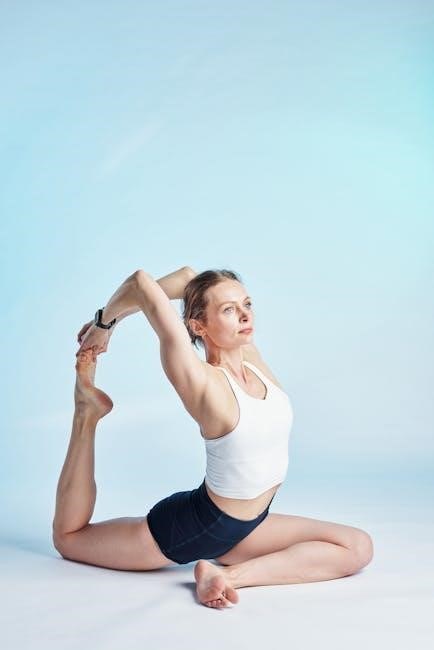
Bikram Yoga 26 Poses PDF: A Comprehensive Guide
Bikram Yoga, utilizing a specific 26-pose sequence, benefits greatly from accessible PDF guides for practice and understanding; these resources detail each posture effectively.
Bikram Yoga, founded by Bikram Choudhury, is a system of 26 postures (asanas) and two breathing exercises (pranayamas) performed in a heated room. A Bikram Yoga 26 Poses PDF serves as an invaluable tool for both beginners and experienced practitioners. These PDFs typically offer detailed instructions, illustrations, and modifications for each pose, enabling safe and effective practice.
The consistent sequence is designed to systematically work every part of the body, promoting flexibility, strength, and detoxification. Utilizing a PDF allows for independent study and reinforces proper alignment, crucial in a heated environment. It’s a portable guide to the core principles of this dynamic yoga style.
The History of Bikram Choudhury and the 26 Poses
Bikram Choudhury, born in 1946, developed the 26-pose sequence from a synthesis of traditional Hatha yoga techniques he learned from his guru, Bishnu Ghosh. He meticulously selected these postures for their therapeutic benefits and ability to work synergistically. A Bikram Yoga 26 Poses PDF reflects this structured approach, preserving Choudhury’s original intent.
Choudhury popularized the practice globally, emphasizing the importance of heat to facilitate deeper stretching and detoxification. PDFs document this specific sequence, offering a standardized practice rooted in his teachings and methodology, ensuring consistency across studios and individual practice.
What is Included in a Typical Bikram Yoga 26 Poses PDF?
A comprehensive Bikram Yoga 26 Poses PDF typically details each pose with step-by-step instructions and accompanying images, ensuring proper alignment. Many include preparatory poses (Pranayama) and the fixed posture sequence. Expect detailed explanations of breathing techniques crucial for maximizing benefits.
Furthermore, PDFs often feature modifications for varying skill levels, safety precautions, and potential contraindications. Some advanced guides may also incorporate anatomical illustrations and insights into the physiological effects of each pose, enhancing understanding and practice.

The 26 Poses Explained
Bikram Yoga’s 26 poses, meticulously sequenced, build heat, increase flexibility, and promote detoxification; a PDF guide clarifies each posture’s technique and benefits.
Pranayama (Breathing Exercises) ⎻ 2 Poses
Bikram Yoga initiates with crucial Pranayama, or breathing exercises, forming the foundation for the entire practice. A detailed PDF will illustrate Standing Deep Breathing (Pranayama 1), emphasizing diaphragmatic control and full lung capacity. Following this, Halfway Lifting (Pranayama 2) prepares the spine for deeper postures, coordinating breath with movement.
These initial poses aren’t merely warm-ups; they actively oxygenate the blood, stimulate the nervous system, and cultivate mental focus. A comprehensive PDF guide will provide visual cues and step-by-step instructions, ensuring correct form and maximizing the benefits of these foundational breathing techniques within the 26-pose series.
Standing Deep Breathing (Pranayama 1)

Standing Deep Breathing, the first pose in Bikram Yoga, is foundational for oxygenating the body. A quality PDF guide will detail proper posture: feet together, hands interlocked, and a straight spine. The focus is on deep, diaphragmatic breaths – inhaling deeply into the abdomen, then exhaling completely.
The PDF should emphasize counting the breath (4 counts inhale, 2 counts exhale) and maintaining a locked-knee stance. This pose prepares the body for the rigorous sequence, increasing circulation and mental clarity. Visual aids within the PDF are crucial for correct form.
Halfway Lifting (Pranayama 2)
Halfway Lifting builds upon Standing Deep Breathing, further preparing the body. A comprehensive PDF will illustrate the correct spinal alignment – a flat back achieved by engaging core muscles. Inhale deeply, then exhale as you slowly lift your torso, keeping the back straight and knees locked.
The PDF should stress avoiding rounding the spine and maintaining a strong core engagement. This pose strengthens the back muscles and improves spinal flexibility. Detailed images and clear instructions within the PDF are vital for proper execution and preventing injury.
Fixed Postures ‒ 22 Poses
Fixed Postures comprise the core of Bikram Yoga, demanding precise alignment and sustained holds. A quality Bikram Yoga 26 Poses PDF meticulously details each of these 22 postures, offering step-by-step instructions and visual aids. These poses are categorized into standing and floor postures, each building upon the previous one.
The PDF should emphasize the importance of maintaining proper form throughout each pose, highlighting common mistakes and offering modifications for varying levels of flexibility. Expect detailed anatomical explanations within the PDF to enhance understanding.
Standing Postures (6 Poses)
Standing Postures initiate the Bikram Yoga sequence, building strength, balance, and foundational alignment. A comprehensive Bikram Yoga 26 Poses PDF will illustrate these six poses – Garudasana, Utkatasana, Trikonasana, Ardha Chandrasana with Pada Hastasana, Kumukasana, and Padangustasana – with clarity.
The PDF should detail proper foot placement, spinal alignment, and arm positioning for each pose. It’s crucial the guide explains how these postures prepare the body for the more challenging floor postures, emphasizing breath control throughout each sequence.
Garudasana (Eagle Pose)
Garudasana, or Eagle Pose, is a challenging standing posture in Bikram Yoga, demanding focus and balance. A detailed Bikram Yoga 26 Poses PDF should visually demonstrate wrapping the arms and legs, emphasizing the bind. It must explain maintaining a straight spine and lifting the chest.
The PDF should highlight modifications for beginners, like using a wall for support. It should also detail the benefits – improved concentration, strengthened ankles, and increased flexibility – and potential contraindications for those with knee or shoulder issues.
Utkatasana (Awkward Pose)
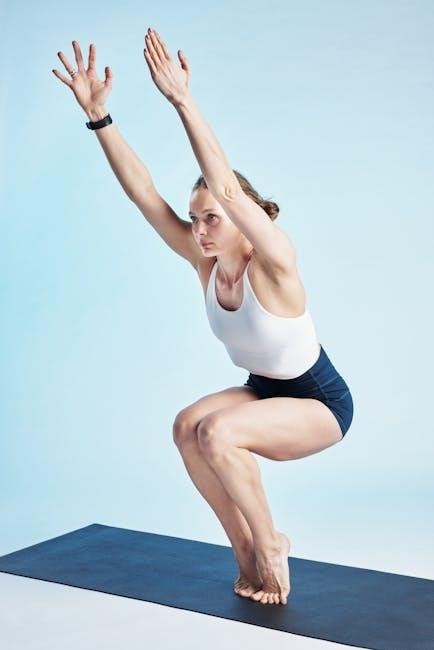
Utkatasana, commonly known as Awkward Pose, is foundational in Bikram Yoga, building heat and strength. A comprehensive Bikram Yoga 26 Poses PDF must clearly illustrate the correct form: feet together, chest lifted, and back straight, mimicking sitting in an invisible chair.
The PDF should emphasize engaging the core and avoiding knee strain. It should also detail holding the pose for a specific duration, typically 60-90 seconds, and offer modifications for beginners, such as reducing the depth of the squat. Benefits include strengthened legs and core.
Trikonasana (Triangle Pose)
Trikonasana, or Triangle Pose, is a crucial posture in the Bikram Yoga series, enhancing flexibility and balance. A detailed Bikram Yoga 26 Poses PDF should showcase precise alignment: legs wide, torso extended, and hand reaching towards the shin or floor, maintaining a straight spine.
The PDF must highlight the importance of gazing upwards and avoiding strain in the neck or lower back. It should also specify holding time and offer modifications for varying flexibility levels. Benefits include improved spinal mobility and strengthened legs.
Ardha Chandrasana with Pada Hastasana (Half Moon Pose with Hands to Feet Pose)
A comprehensive Bikram Yoga 26 Poses PDF must thoroughly illustrate Ardha Chandrasana transitioning into Pada Hastasana. This sequence builds core strength and spinal flexibility. The PDF should detail proper form: side bending with a straight spine, then a forward fold, reaching for the feet.
Emphasis should be placed on maintaining balance and avoiding rounding the back. Modifications for limited flexibility, like bending the knees, are essential. The guide should specify holding times and breathing techniques for optimal benefit.
Kumukasana (Cockroach Pose)
A detailed Bikram Yoga 26 Poses PDF will dedicate significant attention to Kumukasana, often considered challenging. The PDF should clearly demonstrate the leg lifts, emphasizing core engagement and maintaining a flat back. Proper alignment prevents lower back strain, a crucial safety point.
Illustrations should show the correct hand positioning and breathing synchronization. Modifications for beginners, such as reduced lift height, are vital. The guide must explain the pose’s benefits – strengthening legs and core – and potential contraindications.
Padangustasana (Toe Stand Pose)
A comprehensive Bikram Yoga 26 Poses PDF will thoroughly explain Padangustasana, highlighting the importance of balance and core stability. Detailed images should showcase proper leg extension and foot flexion, emphasizing a strong grip with the big toe. The PDF must address common mistakes, like collapsing the core or bending the supporting leg;
Modifications for those with hamstring tightness or balance issues are essential. The guide should detail the pose’s benefits – improved balance and leg strength – and any necessary precautions for safe practice.
Floor Postures (16 Poses)
A detailed Bikram Yoga 26 Poses PDF dedicates significant space to the 16 floor postures, crucial for building flexibility and core strength. Expect comprehensive breakdowns of each pose, including preparatory steps and precise alignment cues. Visual aids, like step-by-step photos, are vital for understanding proper form.
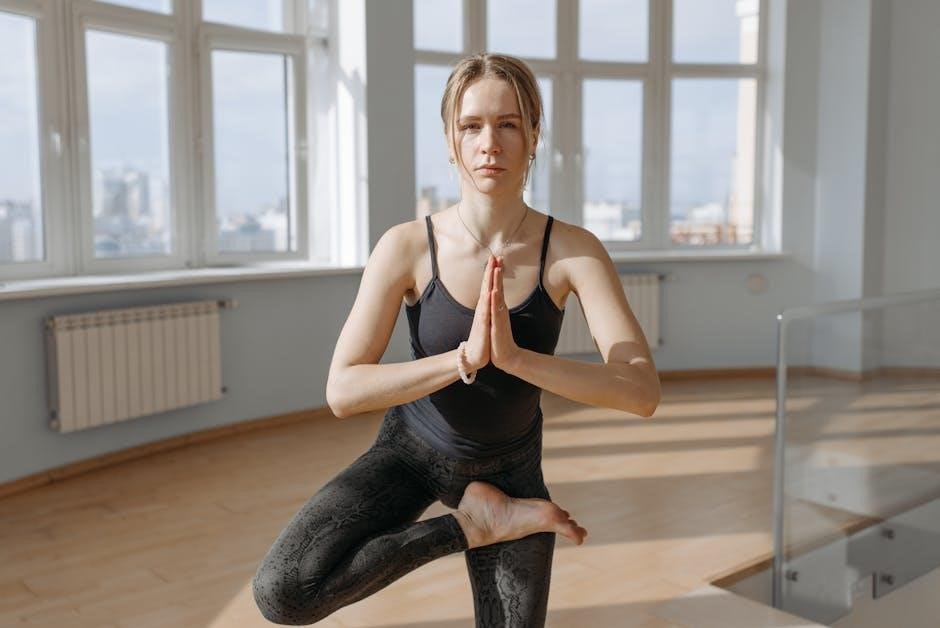
The PDF should also cover modifications for varying flexibility levels and potential contraindications. Emphasis will be placed on maintaining consistent breathing throughout these challenging poses, enhancing their therapeutic benefits.
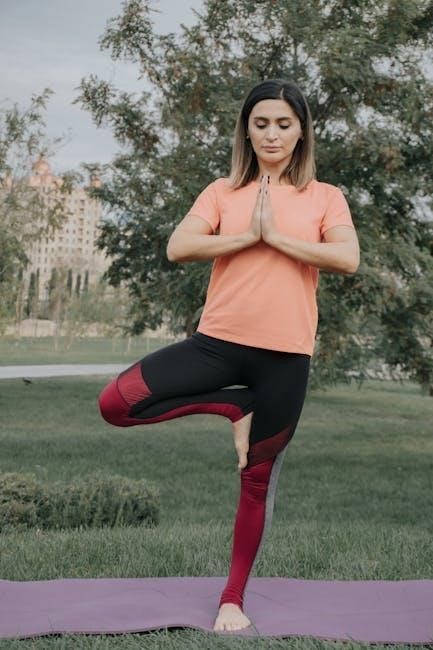
Dandayamana-Janushirasana (Standing Head to Knee Pose)
A quality Bikram Yoga 26 Poses PDF will thoroughly explain Dandayamana-Janushirasana, detailing proper leg locking, spinal alignment, and the importance of a straight back. It will emphasize engaging core muscles for stability and preventing lower back strain.
The PDF should illustrate modifications for those with limited flexibility, such as bending the supporting knee. Breathing techniques, coordinating inhalation and exhalation with the pose’s movements, will also be clearly outlined for optimal benefit.
Standing Bow Pulling Pose
A comprehensive Bikram Yoga 26 Poses PDF guide will meticulously detail the Standing Bow Pulling Pose, emphasizing the crucial hand and foot connection for a strong, stable pull. It will illustrate proper shoulder alignment, preventing strain, and maintaining a lifted chest;
The PDF should explain how to engage leg muscles for the pull and offer modifications for varying flexibility levels. Breathing cues, coordinating the pull with exhalation, will be included for maximizing the pose’s benefits and maintaining balance.
Balancing Stick Pose
A detailed Bikram Yoga 26 Poses PDF will thoroughly explain the Balancing Stick Pose, highlighting the importance of a firm foundation and engaged core for stability. It will showcase the correct arm positioning, extended forward and back, maintaining a straight line from fingertips to toes.
The PDF should illustrate how to focus the gaze (drishti) to aid balance and provide modifications for beginners, such as using a wall for support. Breathing techniques, coordinating with the pose, will be included for enhanced control and focus.
Standing Separate Leg Stretching Pose
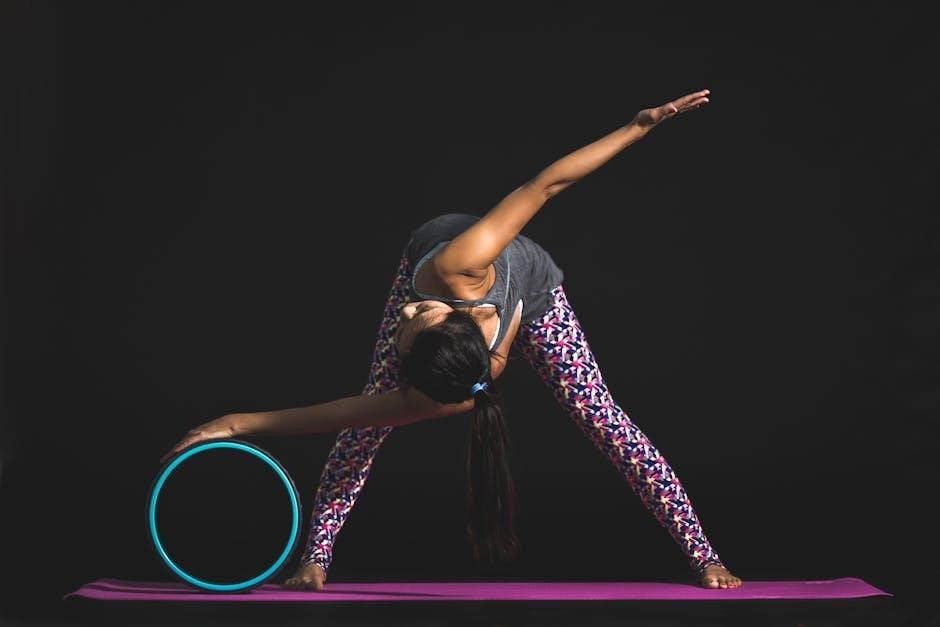
A comprehensive Bikram Yoga 26 Poses PDF will meticulously detail the Standing Separate Leg Stretching Pose, emphasizing the widening of the leg stance and the crucial engagement of the thigh muscles. It will illustrate proper spinal alignment, maintaining a straight back throughout the stretch.
The PDF should demonstrate how to hinge at the hips, reaching forward with interlocked hands, and provide modifications for varying flexibility levels. Breathing cues will be included to deepen the stretch and promote relaxation, alongside safety precautions.
Triangle Pose (Floor Version)
A detailed Bikram Yoga 26 Poses PDF will showcase the Floor Triangle Pose, explaining its transition from the standing version and emphasizing the benefits of a supported stretch. It will illustrate proper hand placement – one reaching towards the shin or floor, the other extending upwards.
The PDF should highlight maintaining a straight spine and open chest, alongside modifications for limited flexibility. Breathing techniques to enhance the stretch and promote stability will be included, as well as cautions to avoid overextension.
Dandayamana-Bibhaktapada-Paschimotthanasana (Standing Wide Apart Leg Forward Bending Pose)
A comprehensive Bikram Yoga 26 Poses PDF will meticulously detail this pose, emphasizing the wide stance and forward bend from the hips, not the waist. It will illustrate proper hand placement – potentially interlocked behind the back or reaching towards the floor.
The PDF should explain maintaining a straight spine as much as possible and the importance of engaging core muscles. Modifications for varying flexibility levels, alongside breathing cues to deepen the stretch, will be included, alongside safety precautions.
Ali’s Triangle Pose
A detailed Bikram Yoga 26 Poses PDF guide will showcase Ali’s Triangle Pose as a variation enhancing flexibility and balance. It will illustrate the unique hand positioning – one arm extended upwards and the other reaching down towards the opposite foot or shin.
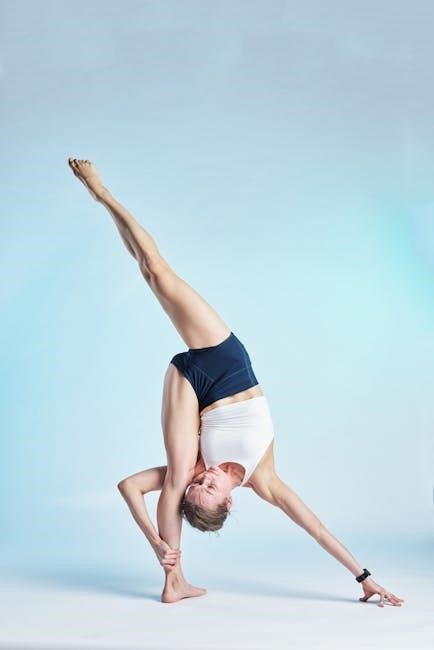
The PDF will emphasize maintaining a straight spine and open chest, alongside proper alignment of the hips and shoulders. It will also provide modifications for beginners and advanced practitioners, detailing breathing techniques to deepen the stretch safely.
Ardha Matsyendrasana (Half Spinal Twist)
A comprehensive Bikram Yoga 26 Poses PDF will thoroughly explain Ardha Matsyendrasana, detailing its benefits for spinal mobility and detoxification. The guide will illustrate the correct leg positioning – one leg extended, the other bent and crossed over – and the arm placement for a deep, safe twist.
It will emphasize maintaining a straight spine during the twist and proper breathing techniques to enhance the stretch. Modifications for varying flexibility levels will also be included, ensuring accessibility for all practitioners.
Bhujangasana (Cobra Pose)
A detailed Bikram Yoga 26 Poses PDF will showcase Bhujangasana, emphasizing its role in strengthening the spine and opening the chest. The guide will illustrate proper hand placement under the shoulders and the importance of engaging the back muscles to lift the torso.
It will highlight maintaining a slight bend in the elbows and avoiding strain on the lower back. Modifications, such as a lower cobra or using forearms, will be included for practitioners with limitations, ensuring a safe and effective practice.
Salabhasana (Locust Pose)
A comprehensive Bikram Yoga 26 Poses PDF will meticulously detail Salabhasana, focusing on its strengthening effect on the entire back body. The guide will demonstrate lifting the legs and arms simultaneously, maintaining a straight line from fingertips to toes, and engaging core muscles for stability.
It will emphasize keeping the neck in line with the spine and avoiding any strain. Modifications, like lifting one leg at a time, will be presented for varying fitness levels, promoting a safe and beneficial practice.
Purvottanasana (Reverse Plank Pose)
A detailed Bikram Yoga 26 Poses PDF will illustrate Purvottanasana, highlighting its benefits for strengthening the posterior chain – back, glutes, and hamstrings. The guide will showcase proper form: hands shoulder-width apart, fingers pointing forward, and lifting the hips towards the ceiling, creating a straight line from shoulders to knees.
It will also address common mistakes, like letting the hips sag, and offer modifications, such as bending the knees, to accommodate different flexibility levels, ensuring a safe and effective practice.
Dhanurasana (Bow Pose)
A comprehensive Bikram Yoga 26 Poses PDF will meticulously detail Dhanurasana, emphasizing its role in enhancing spinal flexibility and stimulating abdominal organs. The PDF will visually demonstrate the pose: lying prone, bending knees, grasping ankles, and lifting chest and thighs off the floor, resembling a bow.
It will also provide crucial alignment cues, warning against hyperextension of the lower back, and suggest modifications – using a strap to assist with reaching the ankles – for practitioners of varying abilities.
Janushirasana (Head to Knee Pose)
A detailed Bikram Yoga 26 Poses PDF will thoroughly illustrate Janushirasana, highlighting its benefits for calming the brain and improving digestion. The PDF will showcase the seated forward bend, emphasizing a straight spine and reaching towards the foot, or shin, with the head.
Crucially, it will advise against rounding the back and offer modifications, like bending the knee, for those with limited flexibility. Proper breathing techniques during the pose will also be explained within the guide.
Paschimottanasana (Seated Forward Bend)
A comprehensive Bikram Yoga 26 Poses PDF will dedicate significant detail to Paschimottanasana, explaining its role in stretching the spine and hamstrings. The guide will visually demonstrate the seated position, emphasizing the importance of maintaining a straight back as you fold forward.
It will also provide clear instructions on how to reach for the feet, or shins, and offer modifications for beginners, such as using a strap. Breathing cues will be included to deepen the stretch safely.
Kapotasana (Pigeon Pose)
A detailed Bikram Yoga 26 Poses PDF will thoroughly illustrate Kapotasana, highlighting its benefits for hip opening and back flexibility. The PDF will showcase the proper alignment, emphasizing a square hip position and a gentle arch in the back.
It will likely include cautions regarding knee sensitivity and offer modifications, such as using a blanket under the hip. Step-by-step instructions, coupled with visual aids, will ensure correct form and prevent injury during practice.
Setu Bandhasana (Bridge Pose)
A comprehensive Bikram Yoga 26 Poses PDF will meticulously detail Setu Bandhasana, emphasizing its role in strengthening the back and opening the chest. The guide will illustrate proper alignment – shoulders grounded, knees tracking over ankles – and demonstrate how to engage core muscles for stability.
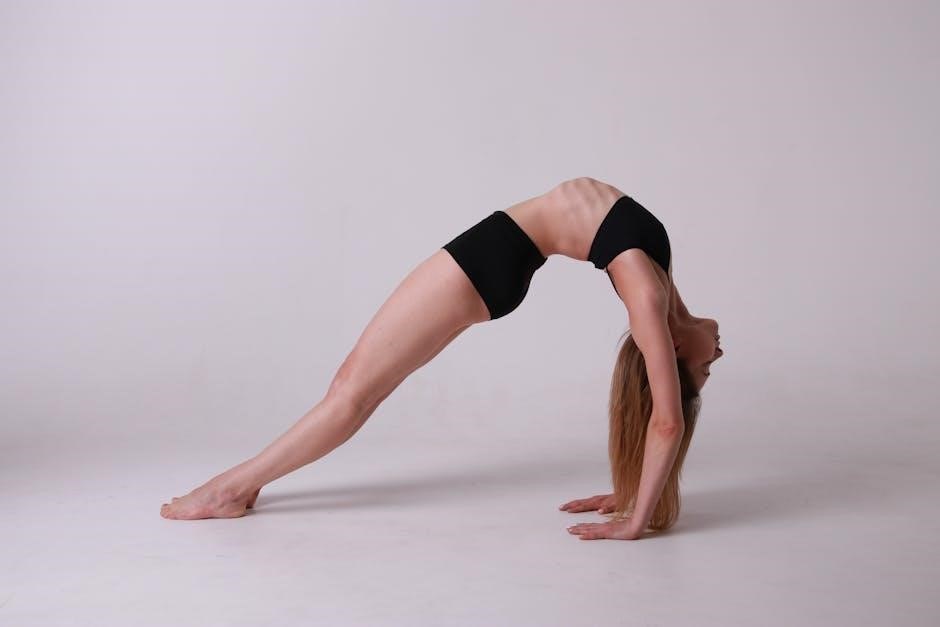
PDFs often include modifications for beginners, like using a block under the sacrum. Detailed instructions and images will help practitioners achieve the pose safely and effectively, maximizing its therapeutic benefits.
Finding and Utilizing Bikram Yoga 26 Poses PDFs
Bikram Yoga PDFs offer convenient access to the 26-pose sequence, aiding practice and understanding; finding reliable sources is crucial for accurate instruction.
Benefits of Using a PDF Guide
Bikram Yoga PDF guides provide numerous advantages for practitioners. They offer a portable and readily available resource for reviewing the 26 postures, allowing for practice anywhere, anytime. A well-structured PDF often includes detailed pose descriptions, step-by-step instructions, and visual aids, enhancing understanding and proper form.
These guides are particularly helpful for beginners learning the sequence, and for experienced yogis seeking a refresher. They eliminate the need for constant internet access during practice and can be printed for offline use. Furthermore, PDFs can include modifications for different fitness levels, promoting a safe and effective practice tailored to individual needs.
Where to Download Reliable Bikram Yoga 26 Poses PDFs
Finding trustworthy Bikram Yoga 26 poses PDFs requires careful consideration. While numerous sources exist online, verifying authenticity is crucial. Official Bikram Yoga websites or certified instructor resources are the most reliable options. Beware of unofficial sites offering potentially inaccurate or unsafe instructions.
Yoga-focused websites and online communities sometimes curate lists of recommended PDFs. Checking user reviews and verifying the source’s credibility before downloading is essential. Prioritize PDFs created by experienced Bikram instructors to ensure proper technique and safety guidance. Always cross-reference information with reputable sources.
Safety Considerations and Modifications
Bikram Yoga’s heated environment demands mindful practice; hydration is paramount. Listen to your body and avoid pushing beyond comfortable limits. Individuals with pre-existing health conditions – heart issues, pregnancy, or joint problems – should consult a physician before starting.
PDF guides often suggest modifications for varying fitness levels. Don’t hesitate to utilize these adjustments to prevent injury. Proper alignment is crucial; consider practicing with a qualified instructor initially. Be aware of potential overheating and dizziness, and rest when needed. Prioritize safety above all else.